“Happiness is not found or sought; it is built.”: Activate your natural Well-being chemistry
From the strategic vision of Choose Happiness School (CHS), happiness is conceived as a comprehensive model of high human performance.
It is not an isolated emotional state or an abstract goal, but a measurable, trainable, and replicable system that integrates well-being science, neurobiology, sustainable habits, and life purpose.
Happiness, understood in this way, ceases to be a promise and becomes a conscious competence: an internal architecture that can be developed, strengthened, and sustained over time, impacting mental health, performance, relationships, and quality of life.
Happiness: A Scientific and Verifiable Model
At Choose Happiness School (CHS), we understand happiness as a construct supported by scientific evidence, articulated through three fundamental pillars:
Positive psychology: emotional well-being, engagement, sense of meaning, quality of relationships, and personal achievement.
Neuroscience: regulation of dopaminergic, serotonergic, and oxytocinergic systems, along with neuroplasticity processes applied to behavioral change.
Healthy productivity: sustainable performance without burnout, attentional focus, mental clarity, and intelligent management of personal energy.
This approach transforms happiness into a strategic and trainable competence, moving it away from abstract ideals and closer to a practical, measurable, and replicable model.
Happiness as an Executive Skill
In the CHS model, happiness is developed in the same way as any critical high-performance skill:
Emotional self-awareness
Stress management
Regulated decision-making
Physical and mental self-care habits
Effective interpersonal relationships
Growth mindset and connection to purpose
The development of these competencies leads to more resilient professionals, more cohesive teams, and emotionally healthy and sustainable work cultures.
“Designing happiness” is a structured methodology that allows each person to build their own well-being system consciously and sustainably. This approach is based on:
Comprehensive assessment of current state
Clarification of purpose and life direction
Design of sustainable routines and micro-habits
Training in mindfulness and emotional regulation
Evidence-based behavioral practices
The result is the development of individuals with greater mental clarity, emotional stability, and a solid sense of direction in their personal and professional lives.
Happiness as Organizational Impact
Happiness not only transforms individual lives; it optimizes entire systems within organizations. Its impact is reflected in:
More collaborative and cohesive teams
Leadership with greater emotional intelligence
Reduction in turnover and absenteeism
Increased engagement and productivity
Creation of psychologically safe environments
At Choose Happiness School (CHS), we train organizational happiness ambassadors: professionals capable of transferring these competencies to the workplace and turning well-being into a cultural and strategic advantage.
Happiness as an Essential Human Value
Although the approach of Choose Happiness School is scientific and rigorous, happiness remains, above all, a profoundly human experience. It includes essential dimensions such as:
Gratitude
Wonder
Genuine connection
Care for others
Sense of contribution
It is this dimension that transforms happiness into an ethical and human driver, and not merely a strategic or performance tool.
“Happiness does not depend on what we have, but on what we are capable of building with what we have.”
Inspired by the science of Sonja Lyubomirsky and the CHS philosophy.
A science and an art that is learned.
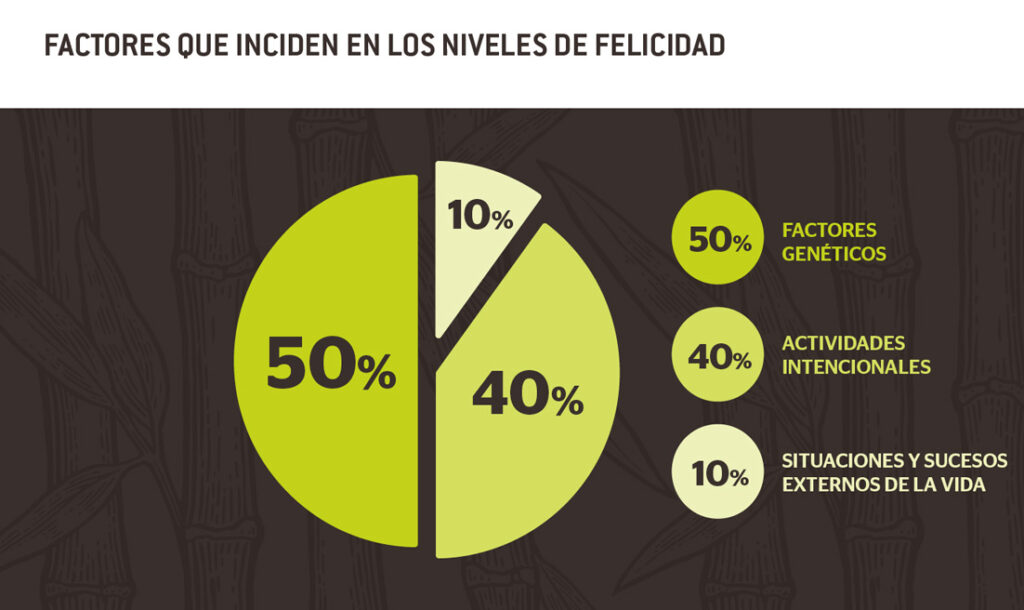
Happiness is neither a gift nor an accident. It is the result of intentional thoughts, emotions, and habits that transform the way we live. Positive psychology and neuroscience confirm that everyone can elevate their level of well-being by learning to manage their emotions, cultivate gratitude, strengthen relationships, and live with purpose.
Positive Emotions
Cultivate gratitude, optimism, and moments of joy.