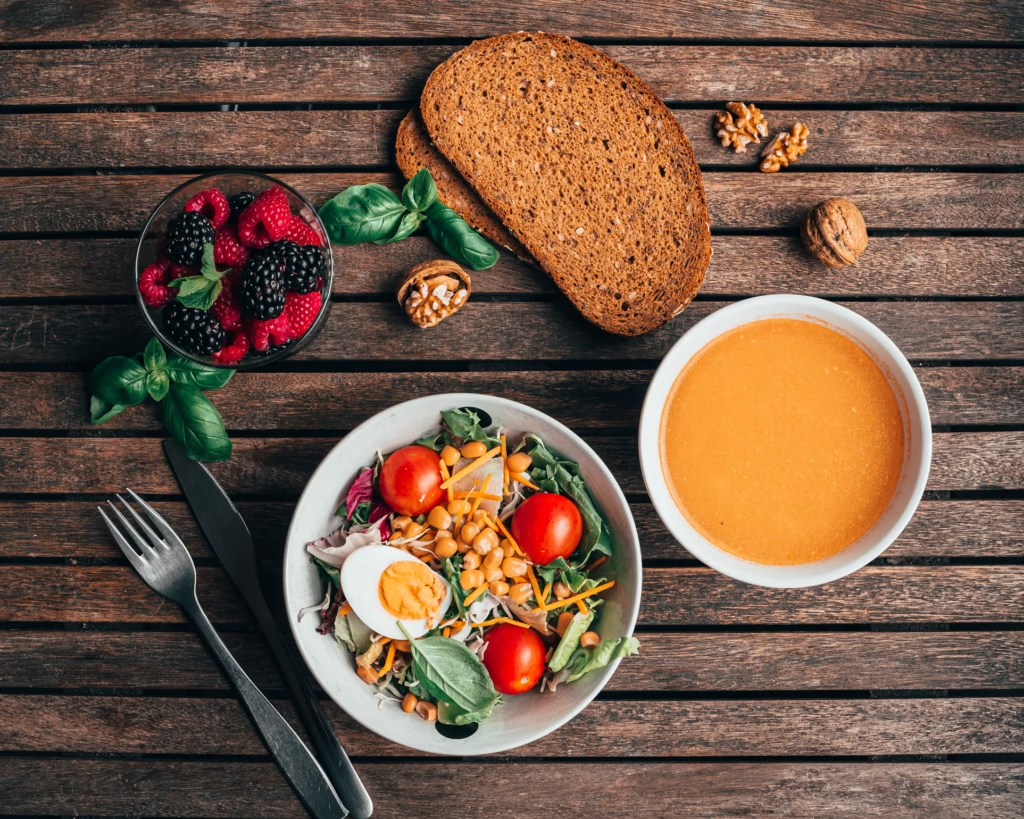
Mood Food is the Choose Happiness School (CHS) approach that integrates mindful nutrition, neuroscience, and emotional well-being to positively influence mood, mental energy, and emotional stability through diet.
It is a model that transforms daily meals into a tool for mental clarity, emotional self-regulation, and sustained vitality.
What is Mood Food?
Mood Food is not a diet, a nutritional fad, or a restrictive plan. It is an evidence-based wellness model that explains how nutrition directly and profoundly influences mood, mental energy, and emotional balance.
From this perspective, food stops being just fuel or immediate pleasure and is understood as a regulating factor for the brain and nervous system. Neuroscience and positive psychology have shown that what we eat impacts:
The production and balance of key neurotransmitters, such as serotonin, dopamine, and GABA, which are directly related to mood, motivation, and mental calm.
The health of the gut microbiota and the gut-brain axis, a central system in emotional and cognitive regulation.
The body’s inflammatory processes, which are now known to influence states of fatigue, anxiety, and low mood.
Energy stability and the ability to concentrate, which are fundamental for daily performance and mental clarity.
At Choose Happiness School (CHS), Mood Food is approached as a strategy for human performance and emotional well-being, rather than simplified nutritionism. Its goal is not to control the body, but to learn how to use nutrition as an ally for the brain, emotions, and quality of life.
Mood Food as a high-performance tool
Mindful eating becomes a real competitive advantage when its impact on the brain, emotions, and daily energy is understood. The Mood Food approach enables:
Greater mental clarity and sustained focus.
More stable emotional regulation under pressure.
Better stress tolerance and management.
Consistent energy levels, without sharp peaks or crashes.
Better sleep quality and physical recovery processes.
From this perspective, Mood Food transforms the relationship with food into a driver of healthy productivity, emotional well-being, and sustainable performance.
Food directly modulates brain chemistry. At Choose Happiness School (CHS), we emphasize the impact of certain key nutrients on emotional regulation and mental well-being:
Tryptophan combined with complex carbohydrates → promotes serotonin production and states of calm.
Omega-3 fatty acids → reduce inflammation and support emotional stability.
Polyphenols and antioxidants → protect the brain against oxidative stress.
Prebiotics and probiotics → strengthen the gut microbiota, a central axis of mood.
Magnesium and B and D complex vitamins → essential for emotional balance, energy, and cognitive function.
The result is a more regulated, resilient, and functional nervous system, capable of sustaining emotional well-being and daily performance.
Mood Food as a mindful practice
In terms of habits, Mood Food is experienced through mindful eating, not through restriction or control. It involves learning to:
Eat with presence and full attention.
Identify signals of true hunger versus emotional hunger.
Create nutritional rituals that promote calm and mental clarity.
Choose foods that add to the day, rather than those that drain energy.
Relate to food without guilt, from a place of self-care and respect for the body.
In this way, eating stops being a source of conflict and is transformed into a tool for mental health, emotional regulation, and daily well-being, rather than an internal battlefield.
Mood Food and human well-being
The human dimension is essential. Mood Food does not only address what we eat, but how and from where we relate to food. It touches on deeply human aspects such as:
The pleasure of eating
Emotional memory
Cultural identity
Socialization
Gratitude toward food
Because eating is also about connection, memory, tradition, and affection. And it is precisely this emotional and relational dimension that enhances and sustains biological well-being, closing the circle between body, mind, and meaning.
Mood Food as an organizational culture
In work environments, the Mood Food approach promotes:
Teams with greater mental energy and concentration capacity.
Less irritability and emotional reactivity in daily life.
Reduction of accumulated tiredness and cognitive fatigue.
More effective mindful and healthy breaks.
Work environments that simultaneously look after performance and mental health.
When integrated as part of the culture, Mood Food improves the quality of the workday and, as a direct consequence, the quality of individual and collective performance.
The most powerful food is not in the fridge, but in the daily choice to care for yourself with awareness and respect.